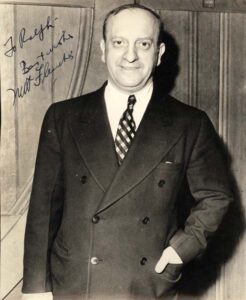
Nat Fleischer Founder/Publisher The Ring
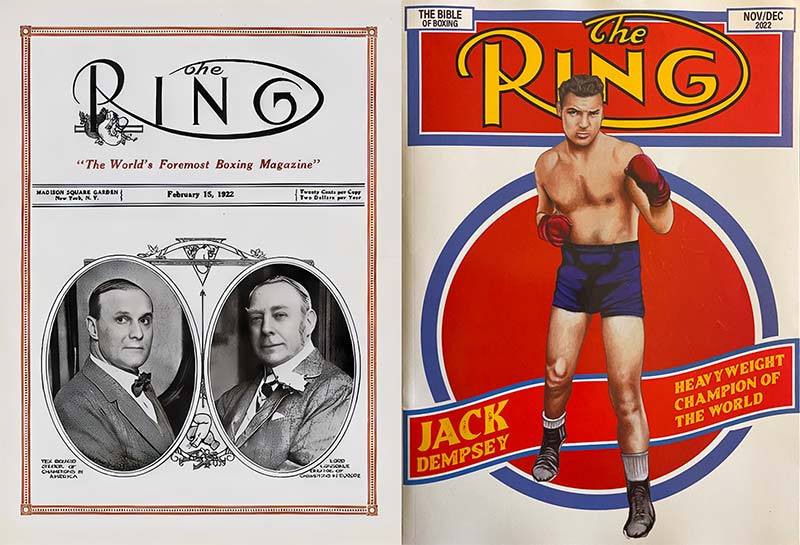
In February of 1922, Nat Fleischer, the diminutive New York Evening Telegram sports editor and WWI veteran whose first big news story was the 1912 sinking of the Titanic, took a gigantic swing — and landed hard, in a way that has resonated and endured for a full century.
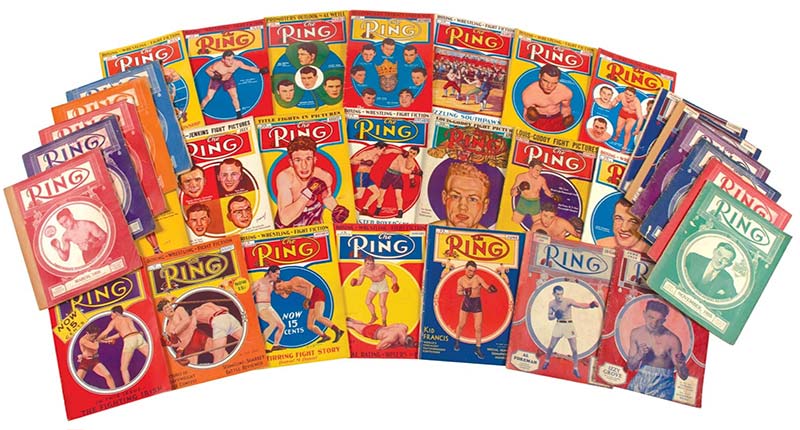
Capitalizing on the Golden Age of American Sports — and boxing in particular — the 34-year old Fleischer launched The Ring magazine, a 24-page monthly devoted to covering the pugilistic arts. His mission was supported by iconic boxing promoter Tex Rickard and his press agent, Ike Dorgan. The first issue cost 20-cents.
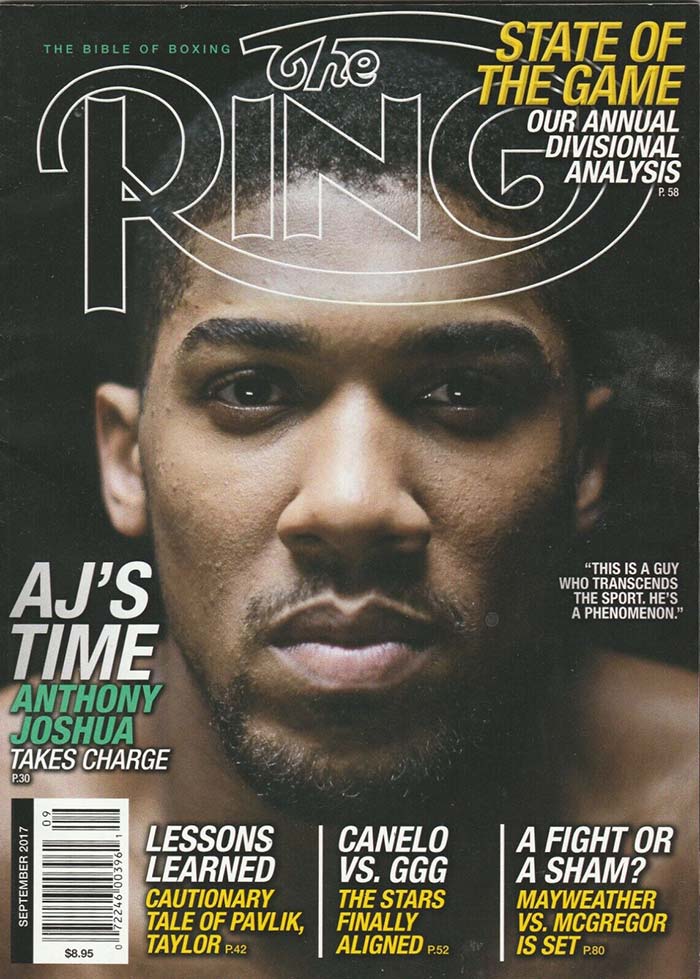
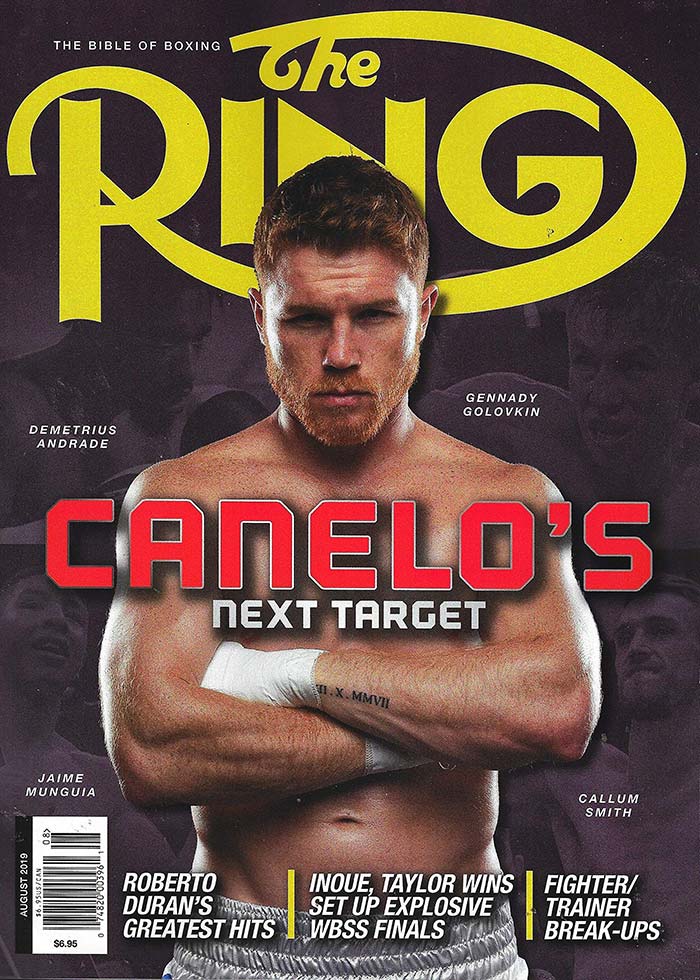
By 1972, 50 years after its launch, The Ring had become one of the best-selling monthly magazines and was referred to as “The Bible of Boxing.”
The Bible of Boxing since 1922The Ring made it a full century on newsstands, the longest-running sports publication in history. However, in the magazine’s November/December 2022 issue, it was announced by current editor Douglass Fischer that “times are not changing; they’ve changed.” Owing to exponentially-escalating distribution and production costs (ink, paper, printing), The Ring will no longer publish a print edition.
Douglass Fischer, Editor-In-Chief, The Ring
Current Ring editor Fischer has assured boxing fans that, while The Ring may be down, it is definitely not out. “The magazine will carry on through the internet,” Fischer said, according to NYFights.com. “The Ring is not dead. The Ring is not going away. If anything, The Ring will continue to be here for us, bigger and better than ever. ‘The Bible of Boxing’ has withstood the test of time.”
Launched in the ground floor janitor’s closet at Tex Rickard’s Madison Square Garden, Nat Fleischer’s “one-man show,” The Ring magazine published — and quickly sold-out 2,700 copies of its February 1922 debut issue. Response to the publication — founded in Fleischer’s words to be “the recording organ of both the contemporary scene and the romantic past in the history of pugilism” — was instantly ecstatic. Some people began immediately referring to The Ring as “a valentine to pugilism.”
Fleischer became known as Mr. Boxing
The featherweight Fleischer, 5’2”, 122-pounds, always in a smart suit and an immaculate necktie, was never bashful about his mission statement. During his 50-year tenure as editor, Fleischer laid it out clearly on every issue’s Table of Contents page. “The Ring is a magazine which a man may take home with him,” Fleischer wrote. “He may leave it on his library table safe in the knowledge that it does not contain one line of matter either in the text or the advertisements which would be offensive. The publisher of The Ring guards this reputation of his magazine zealously. It is entertaining and it is clean.”
Throughout the Roaring Twenties, The Ring not only survived, but flourished. By its sixth issue, July 1922, the magazine enjoyed a nationwide circulation of nearly 13,000 and replaced the long-running National Police Gazette as America’s go-to periodical for all things boxing related, while also diluting the popularity of Mike Collins’ Twin Cities-based Boxing Blade. At its peak in the 1940s, The Ring had a nationwide circulation of 200,000.
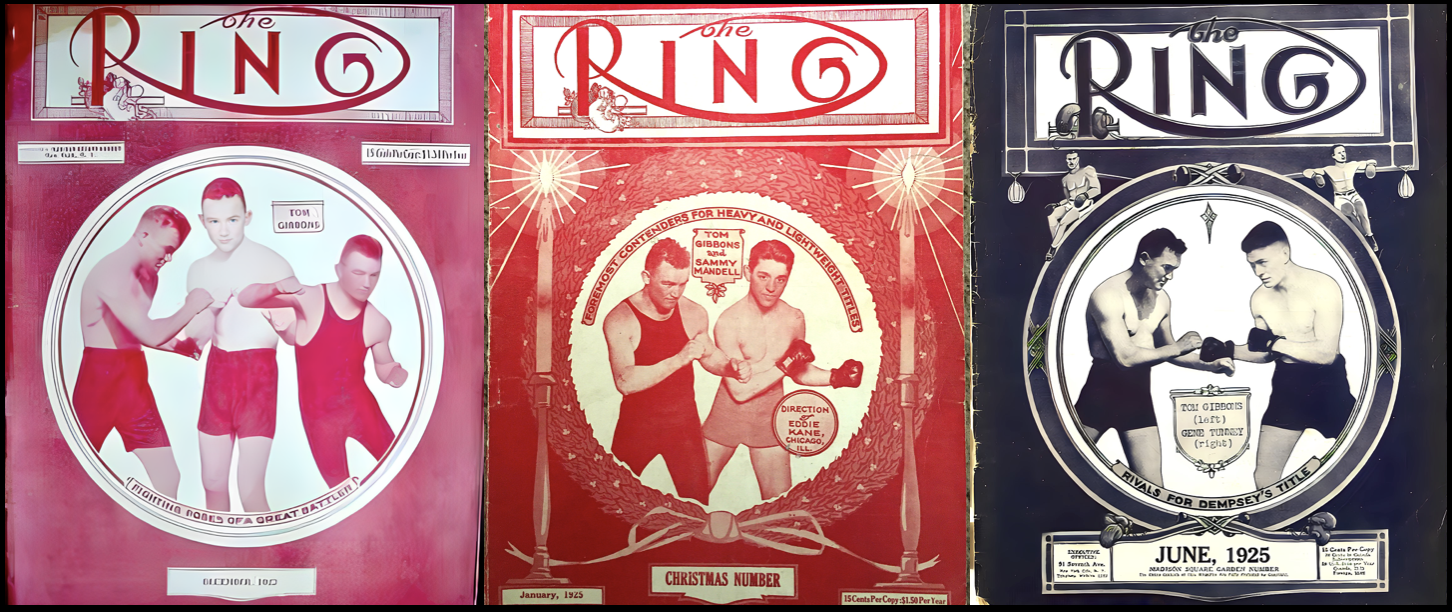
Tommy Gibbons Ring Covers Dec 1922, Jan 1925, Jun 1925 Gibbons FFG Archive
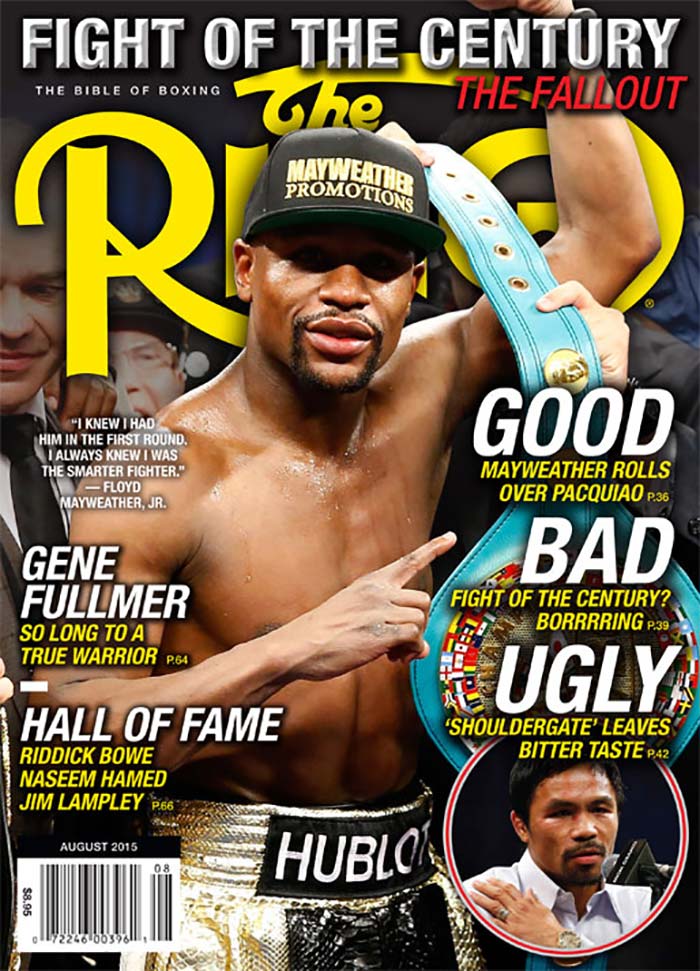
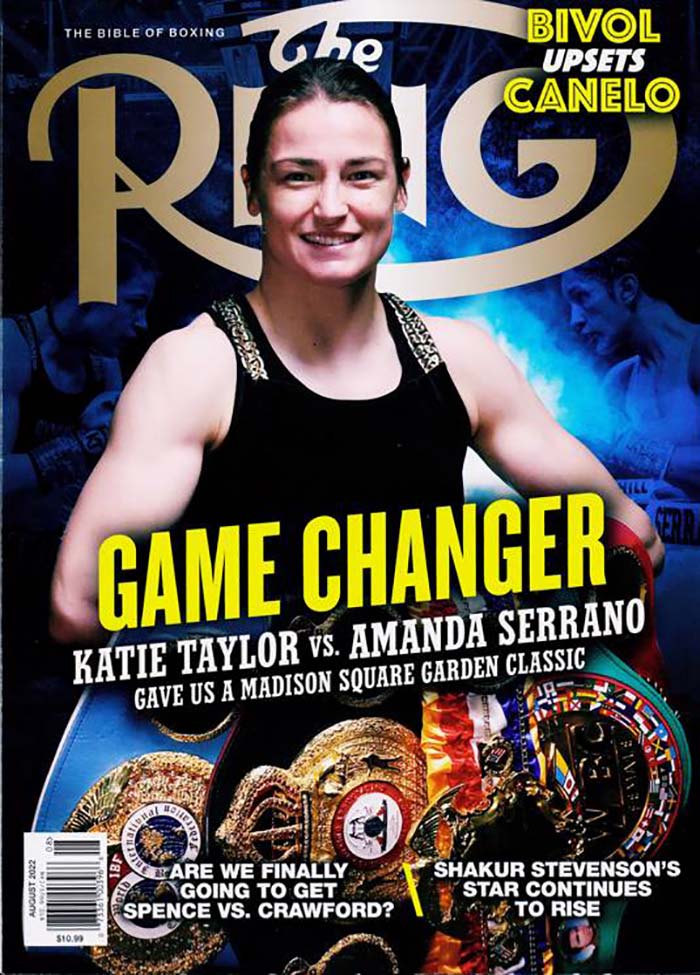
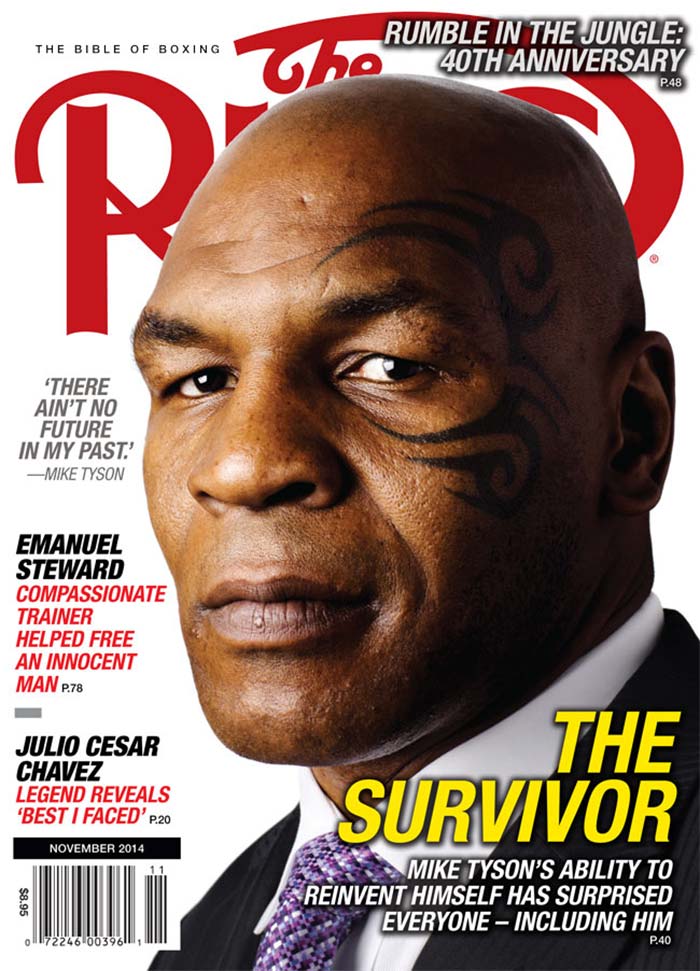
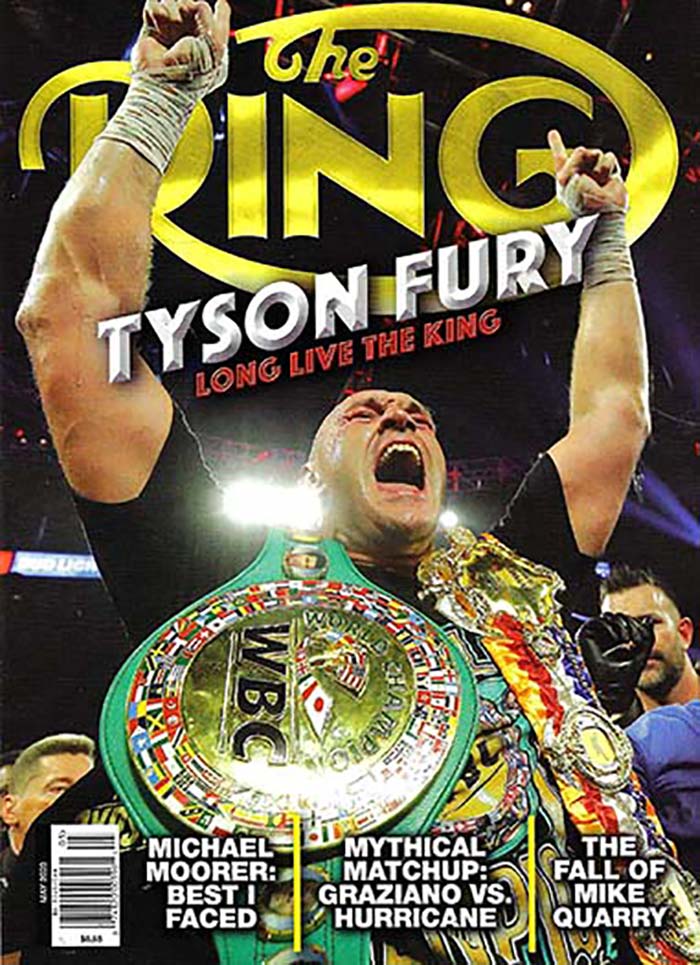
Landing a Ring cover became a top priority for every boxing manager from the 1920s and forward.
If a fighter was ever going to become a fistic supernova, then he absolutely had to appear on the cover of The Ring.
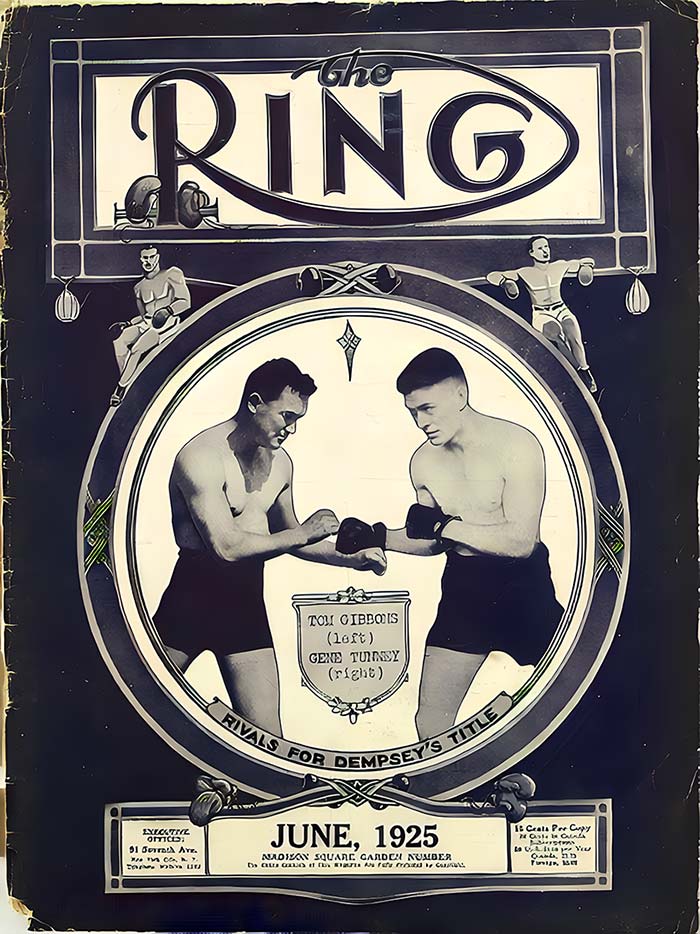
Tommy Gibbons, one of FIGHT FOR GLORY’s heroic boxing brothers, made three such appearances (December 1922, January 1925, June 1925). Fleischer along with The Garden’s impresario Rickard declared Tommy Gibbons as “the best in the world” and “the greatest boxer of his weight.”
The Ring, June 1925 Tommy Gibbons vs. Gene Tunney Gibbons FFG Archive
Tommy’s older brother, Mike Gibbons, retired from the ring in late-summer 1922, narrowly missing his shot at a Ring cover. Mike, also known as the “St. Paul Phantom”, did receive extensive coverage through the decades. Fleischer was a die-hard Phantom fan. “Mike Gibbons was a master of the sweet science, one of the best that ever entered the squared circle,” he wrote. “His defense was perfect, his speed was blazing, his attack, mixed with puzzling feinting, was devastating. But for the prevalence of decision-less boxing that reigned during his career, Mike could have easily been crowned world middleweight champion.”
In 1925, not long after Tommy Gibbons’ third Ring cover and final fight, along with Tex Rickard’s unrelated loss of “temple of fistiana” Madison Square Garden, Fleischer sensed that boxing’s Golden Age was winding down. “An age was ending,” Fleischer grieved. “The sun was setting. The curtain was coming down. Americans could feel it on their faces and in their hearts. The nation was changing. It would not be an easy change. Gone is the romance which we like to believe once was the very soul of the ring. Gone.”
The Ring, of course, endured for another 97-years, even as the public’s obsession with prizefighting waxed and waned, then waxed again. In the Ali-era, The Ring’s popularity was stratospheric. The Tyson years were much the same. In between, deep sags in subscriptions and newsstand sales. But like the stout-hearted fighters it often covered, The Ring, however often it was knocked down, always got back up to keep on swinging.
As “The Bible of Boxing” lays down its axe once and for all, never again to publish on paper, may it thrive in the digital realm. For while there may be nothing more stable than change, as Bob Dylan insists, there is also nothing more necessary than the deep need of human beings — and fighters, perhaps, more than most — to believe.
If a boxer was ever to become a fistic supernova, he absolutely had to appear on the cover of The Ring.
For a hundred years, The Ring has provided a vivid window into pugilism’s special worlds, a mirror to popular culture and its sporting heroes, a flavorful, fact-filled repository of heroes and villains, a visually-sumptuous scrapbook of ring warriors. Indeed, a reason to believe — for boxers and their fans alike.
Long live The Ring!
Contains information related to marketing campaigns of the user. These are shared with Google AdWords / Google Ads when the Google Ads and Google Analytics accounts are linked together.
90 days
__utma
ID used to identify users and sessions
2 years after last activity
__utmt
Used to monitor number of Google Analytics server requests
10 minutes
__utmb
Used to distinguish new sessions and visits. This cookie is set when the GA.js javascript library is loaded and there is no existing __utmb cookie. The cookie is updated every time data is sent to the Google Analytics server.
30 minutes after last activity
__utmc
Used only with old Urchin versions of Google Analytics and not with GA.js. Was used to distinguish between new sessions and visits at the end of a session.
End of session (browser)
__utmz
Contains information about the traffic source or campaign that directed user to the website. The cookie is set when the GA.js javascript is loaded and updated when data is sent to the Google Anaytics server
6 months after last activity
__utmv
Contains custom information set by the web developer via the _setCustomVar method in Google Analytics. This cookie is updated every time new data is sent to the Google Analytics server.
2 years after last activity
__utmx
Used to determine whether a user is included in an A / B or Multivariate test.
18 months
_ga
ID used to identify users
2 years
_gali
Used by Google Analytics to determine which links on a page are being clicked
30 seconds
_ga_
ID used to identify users
2 years
_gid
ID used to identify users for 24 hours after last activity
24 hours
_gat
Used to monitor number of Google Analytics server requests when using Google Tag Manager