
author's note
GERARD GIBBONS

“ The heritage of the past is the seed that brings forth the harvest of the future. ”
— Wendell Phillips, The Future of Western Culture (1852)
My earliest memory is sitting on my grandfather Tommy’s lap in the summer of 1960 at our Mojave Desert home in California. I’m four years old and, in his embrace, I’m feeling deeply safe, valued, and loved. His smile is a beacon; his eyes, tranquil pools of blue. A few months later, the extraordinary man—celebrated as a heavyweight boxer and crimefighter from Minnesota, immortalized by his 1923 world championship battle against Jack Dempsey—was gone.
Tommy Gibbons had been my father’s hero and best friend, just as my dad was mine. A born storyteller, my father, Tommy Jr., recounted vivid tales of Tommy’s exploits and those of his older brother, Mike, the legendary St. Paul Phantom. Together, they were the greatest boxing brothers of their time, acclaimed Hall of Famers, known as the “shining knights of the ring.” They embodied the grit and grandeur of the early twentieth century, when boxing was not only the world’s most popular entertainment, but a powerful looking glass into the soul of the American Dream.
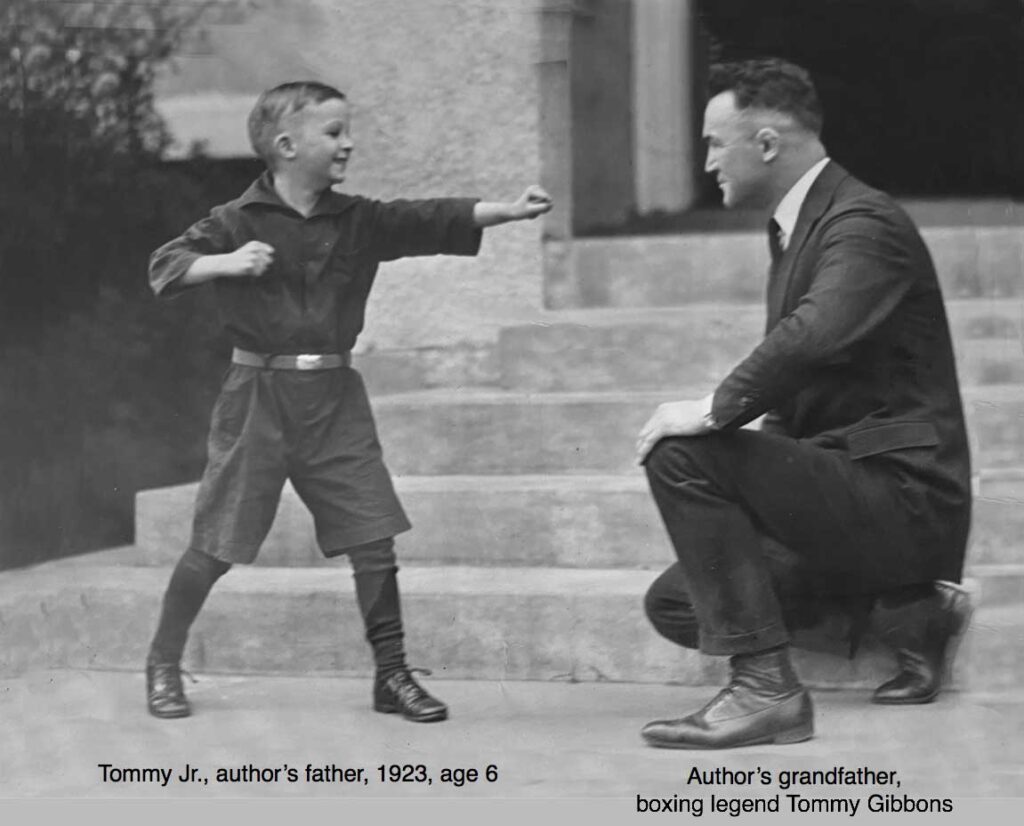
Mike and Tommy rose to prominence during America’s most transformational period, which was also the heart of boxing’s Golden Age. Their journey is a kaleidoscope of history: from the howling desperation of old Ireland to St. Paul’s mean streets, smoky gymnasiums, vaudeville theaters, and the grand boxing arenas of New York, Boston, Philadelphia, Winnipeg, Chicago, Detroit, Portland, San Francisco, New Orleans, Havana, and London. They navigated race riots, presidential assassinations, suffragette marches, a global pandemic, and a world war, brushing shoulders with Plains Indians, the golden pens of sportswriting, jazz legends, movie stars, and gangsters. Crisscrossing the nation on locomotives to battle in the greatest sporting venues, they witnessed the vanishing Wild West, the rise of major cities, the advent of automobiles and aviation, the birth of radio and cinema, and the immigrant waves arriving on America’s shores.
Yet I did not—or could not—grasp the depths of these truths until much later in life.
When my father passed in the 1990s, he left me a trove of sealed cardboard boxes and a large locked trunk that he said were family treasures—newspaper clippings, photographs, memoirs, diaries, and love letters. For decades, I carted these boxed relics from place to place, unsure of how to approach them. Then in 2016, driven by a longing to reconnect with my roots, I finally unsealed the vault, diving into one of the boxes.
The first item I took out was a photograph of my parents on their wedding day, just months before the attack on Pearl Harbor. It hit me like a blow from savage heavyweight boxing champion Jack Dempsey himself, reopening the wound of my mother’s sudden death when I was barely a teenager. Yet, through the pain, I felt a connection—a shared grief that spanned generations. My mother’s loss mirrored my father’s heartbreak when his mother—my grandfather Tommy’s wife—died tragically in 1940.
This chain of love, loss, and resilience awakened something in me. I found myself reflecting on my dad’s lifelong lessons about the primacy of God, the importance of family, and the value of service to community and country. In that moment of stillness, the stacked treasure summoned me with quiet force. Were there additional clues here as to who my family had really been? Was there wisdom to be gleaned? Maybe even hints as to how I might move forward in life—or what family legacy I might pass on?
Empowered, I returned to the boxes and ventured forth to mine the great unknown, uncovering in the process the remarkable lives of my grandfather Tommy and great-uncle Mike
I approached their forgotten past like a puzzle, using my craft as a storyteller, filmmaker, and researcher to reconstruct the narrative they left behind. It took years—much longer than I ever imagined. Through investigation and interrogation of family legends in galleries, libraries, archives, museums, and memorabilia collections worldwide, I discovered not just pieces of history, but genuine wisdom: a roadmap for living with purpose today.
Mike and Tommy’s story is a powerful testament to the indomitable human spirit. It’s a story of perseverance and faith, of love tested and sacrifices made. It speaks to the quiet strength of humility, the grace of gratitude, and the redemptive power of forgiveness. At its heart, it’s about chasing impossible dreams, forging bonds of brotherhood, and discovering unlikely friendships. It’s about heroism and patriotism, about uncommon valor in ordinary men, and the infinite, mysterious ways in which all our lives are bound together.
The Gibbons brothers’ journey reminds us that the fight to achieve dreams, large or small, is timeless. Their story is about walking through fire to become something greater.
As Ken Burns once said, the historian’s work is to “wake the dead.” He also reminded us that “God is in the details.” I’ve found both to be true. The search for meaning isn’t only about arriving at answers; it’s the seeking itself that transforms us. As I delved into the lives and landscapes of a bygone era, something unexpected happened: the past began to feel deeply personal. I wasn’t merely learning history—I was feeling it in my bones.
The joy and labor of researching this book became an odyssey—several trips around the world, and somehow, a return home. Along the way, I connected more deeply to my family, gained new insight into myself, and deepened my understanding and appreciation of the larger American experience we all share.
Although I met my grandfather Tommy only once, my pursuit of history’s deepest truths brought me so much closer to him, to his brother Mike, to all of my ancestors, and to their world—the heroes, villains, and everyday people who bravely fought the good fight for those they loved. I’ve come to respect, admire, and love them all.
The Fight for Glory franchise, beginning with this book, The St. Paul Phantom, is about the common struggles that unite us. A century ago, everyone had a dream, so everyone had a fight. Realizing these dreams, even the simplest ones, required overcoming astonishing adversity. If you were smart enough, tough enough, you might fulfill them. This was the rugged free spirit that built the Promised Land of America.
What all the people in this story endured transformed me. I hope it will inspire you as well. Humbly, I invite you to join me on this extraordinary American adventure.

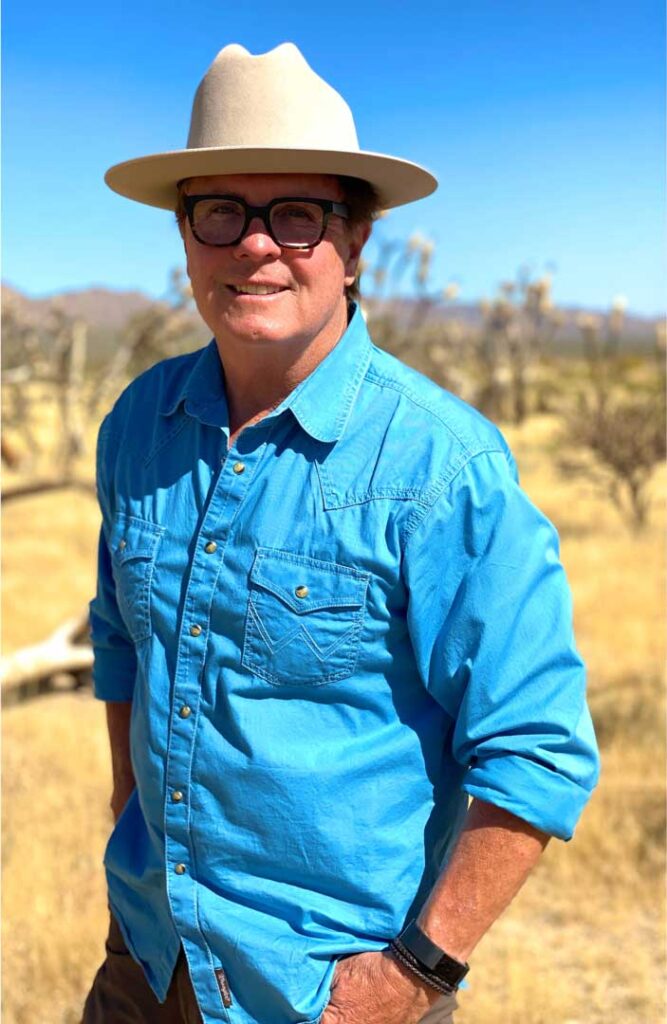
— GERARD GIBBONS Author • Historian
Team gibbons bios 1/3

— DR. GERARD GIBBONS
Dr. Gerard Gibbons is a noted non-fiction author, storyteller, and historian. After 30+ years as an award-winning filmmaker and brand strategist, he has turned his attention toward his own family legacy and the never-been-told, true story of his legendary prizefighting uncle and grandfather, MIKE and TOMMY GIBBONS.
Gerard, CEO/Founder of Visual Eyes Inc., spawned a novel communications agency focused on HD video, multimedia, human engagement, and behavior change. Gibbons’ exploits carried him around the world with the Defense Department, Special Operations Command, Fortune 500 companies, Walt Disney, Special Olympics, government agencies, as well as advanced science, medical and technology companies.
Today, Gerard — an avid photographer, guitarist, backpacker, and fly fisherman — strives to live by the motto, borrowed from his dad and grandfather, “Comport yourself with elegance and moderate your pace.”
A CONVERSATION WITH AUTHOR DR. GERARD GIBBONS
In the book’s introduction, you recall sitting on your grandfather Tommy’s lap as your earliest memory. How did that moment fuel your decades-long journey to write this book?
That earliest memory—sitting on my grandfather Tommy’s lap, feeling profoundly safe and loved—planted the seed for Fight for Glory. The sense of refuge I felt in his presence never faded, and it became the first doorway to this book.
But the key was placed in my hand years later by his son, my father, Tommy Jr. Not long before he passed, Dad entrusted me with several sealed “mystery boxes” filled with clippings, photos, and letters. He left no instructions, no explanation. I believe now he knew I would one day feel their pull.
The deeper spark, however, may trace back to a conversation with my father as I was graduating from university in 1978. We were driving a dark Mojave highway when I spoke of missing my older siblings, who had scattered after my mother’s death eight years earlier, when I was just fourteen. After listening quietly, Dad shared something my mother had told him in confidence before she died: she believed I was meant to honor family in some lasting way. My parents never played favorites, so his words startled me. I tucked them away and, in time, forgot.
Decades later, in August 2016—forty-six years after her passing and nearly twenty years after my father’s death—I finally opened the boxes. Inside, I found the threads of a much larger tapestry than I had imagined: my grandfather’s boxing career, the Gibbons family’s immigrant story, and the broader saga of early-twentieth-century America. Those artifacts compelled me to write, not simply about boxing, but about how love, faith, and family endure through hardship.
As I pieced the story together, I saw how my grandfather and father mirrored each other in kindness, resilience, and devotion. Writing became both tribute and discovery: honoring their legacy while exploring how history lives in us. And in the quiet moments, I could not help but wonder: Was my mother’s vision a prescient glimpse of the path I would eventually take? Over time, I’ve come to believe it was.
What kept you from opening the boxes, and how did finally doing so change your view of family legacy?
Life delayed me from opening the boxes—career, marriage, raising a family, and the sheer weight of what I might find inside. I also feared confronting my father’s legacy after his passing and the deeper wound of losing my mother so young.
When I finally opened them in 2016, it felt like stepping into a time machine. The contents revealed not only champions in the ring but immigrants who embodied resilience, faith, and the American Dream. Each clipping, letter, and photograph drew me closer to their struggles and sacrifices, reshaping how I understood family legacy.
The Gibbons story became more than boxing; it became a testament to endurance and love. After years of storytelling about the future, I realized my true calling was to bring the past—and my family’s place in it—vividly to life.
Which discovery in the family archives most surprised you and convinced you to write this book?
The most powerful discovery was a bundle of love letters from Tommy to my grandmother, Helen, written in 1925 while he trained for the heavyweight championship. Tied with twine, the envelopes bore patriotic images of Tommy and Gene Tunney, filled with words in his blue cursive and purple typewriter ink.
One line stopped me cold: “Without you, I am alone as a rock at the bottom of a deep lake.”
Here was a fighter with 105 bouts behind him and on the verge of battling for the championship crown, yet his heart was entirely with his ailing wife in Room 517 of St. Joseph’s Hospital and their children, including my young father. Reading those letters, I wept—and knew instantly this was not only a boxing story, but a love story I had to tell.
How did writing this book bring you closer to your family and yourself, and what moment led to a profound personal discovery?
Losing my mother at fourteen left me with a deep sense of incompleteness—an early encounter with mortality that shaped my voice with empathy and authenticity. Decades later, as I wrote The St. Paul Phantom, I began to understand how that loss, and later my father’s passing, had quietly prepared me to recognize grief not only as pain but also as a teacher.
The Eastern idea of “suffering into truth” resonated deeply with me, and I saw how the Gibbons brothers’ losses—personal and professional—had forged their own resilience. Their struggles mirrored my own, and weaving that perspective into the narrative gave the story a universality that speaks to anyone who has faced hardship.
The most profound discovery came while reading Tommy’s letters to his wife, Helen. In his words, I felt the devotion of a man balancing glory with family sacrifice. Across a century, I forged connections with grandparents I never knew, and in that process, my own wounds of loss began to heal. This journey revealed that resilience is often inherited, carried through generations, and that the American story itself is one of perseverance. Writing this book offered me not just history, but a sense of wholeness I never expected.
When did the project pivot from family memoir into a broader American saga?
Although my father’s archive gave me a starting point, I knew little about my ancestors or the worlds they inhabited. Years of research—genealogy, census records, letters, and newspaper archives—changed that.
What began as a family memoir quickly expanded into something larger. The Gibbons brothers’ journey from Irish immigrants to American boxing stardom reflected a universal immigrant narrative: risk, resilience, redemption, and opportunity.
As I reconstructed their lives and the world around them, the story grew into a mirror of the broader American saga—ordinary people striving for extraordinary chances in a land of promise. That evolution convinced me the story could speak far beyond family and deeply connect with contemporary audiences, as stories like Rocky, Seabiscuit, and Cinderella Man do.
You call boxing “a looking glass into the soul of the American Dream.” How did the sport offer a path for immigrants and the working class? What does that mirror still reveal about social mobility today?
In the early twentieth century, boxing was America’s premier sport and a mirror of its aspirational spirit. For immigrants and the working class, it offered one of the few avenues to rise. Fighters carried their heritage into the ring—Irish, Italian, Jewish, African American—and their communities rallied behind them, seeing in each bout a reflection of hope.
Mike and Tommy Gibbons, sons of Irish immigrants, embodied that promise: through skill, grit, and perseverance, they turned hardship into opportunity, mirroring the American Dream itself. Boxing’s appeal cut across race and class, suggesting that talent could transcend circumstance.
Today, that same mirror reflects both aspiration and inequity—the Dream remains possible, yet fragile, and still worth fighting for.
Writing this book took years longer than you imagined. What were the biggest challenges you faced during the research and writing process, and how did you overcome them?
The greatest challenge was the sheer volume of material—more than a century of family records, newspapers, letters, and memorabilia. At times it felt like drinking from a fire hose.
To keep from drowning in it, I built a disciplined system early on: a chronology-based filing method that let me capture, organize, and retrieve data efficiently. This structure allowed me to connect everything—from census records to love letters—within a coherent historical frame.
It was time-intensive, but by tackling it one piece at a time, I transformed chaos into story. Ultimately, it became a lesson in patience, persistence, and devotion.
Your prose reads very cinematically. Discuss this approach to storytelling on the page.
My first degree was in film and television production with a focus on cinematography, and that training shaped how I write. I’ve always believed strong prose should fire the imagination in visual, aural, and sensory ways. On the page, I try to write through the camera’s eye: wide shots to frame historical context, close-ups for emotional intimacy.
Fight scenes unfold like tracking shots, capturing movement and rhythm, while shifts in perspective resemble rack focus, moving fluidly between characters’ thoughts and actions. For instance, Mike’s ordeal at Brighton Beach is written with a shallow depth of field, narrowing to his illness and anxiety.
This cinematic approach lets readers not just observe history, but inhabit it—making the story vivid, immediate, and immersive.
The best historians know that “God is in the details.” What’s an unexpected treasure you discovered in the sea of research materials?
It sometimes felt as though every day yielded a new treasure—surprising juxtapositions, hidden relationships, or small facts that clarified the larger story. But one micro-detail stands apart because I was able to confirm it in person at the Gibbons homestead in County Mayo.
An eighty-year-old family memoir claimed my great-grandparents were married by Father Jim Corbett, uncle of heavyweight champion James J. “Gentleman Jim” Corbett. Years later, I traveled to St. Mary’s Church in Partry. At its entrance, I found Father Corbett’s grave, alongside stained-glass windows donated by both the Corbett and Gibbons families. The lore was true.
That discovery forged a direct link between my ancestors and boxing’s rise in America during the 1880s—decades before Mike and Tommy ever laced gloves—and reminded me that history reveals itself only through persistence and patient pursuit.
Ken Burns says writing history is about “waking the dead.” Which character was hardest to bring to life? In telling Mike and Tommy’s story, did you find the ancestral chain healed, or simply better understood?
Both brothers fascinated me, but they woke at different speeds.
Tommy surfaced first: open-hearted, quick with a grin, sounding uncannily like my father. His warmth and plainspokenness made him easy to hear on the page, and the kinship—the way he constantly reminded me of my father—made him simpler to write and more resonant. Many days, it felt like I was palling around again with Dad.
Mike—the St. Paul Phantom—was harder. He lived in the margins: economical with words, precise in action, private by instinct. To coax him out, I became a detective—reading his letters, combing sports pages, tracing the observations of writers, and listening for his echo in Tommy’s memoirs.
The breakthrough came in understanding his “sweet science.” His style—angles, feints, distance, discipline—wasn’t only boxing technique but temperament. Once I saw that, his voice emerged: measured, exact, fierce in thought more than volume.
Mike’s mantra, “I make ’em miss, then I make ’em pay,” revealed a philosophy of intellect and resilience over brute force. It minimized damage, extended his career, and mirrored a broader ethos of thriving through adaptability. Balanced with Tommy’s warmth, Mike’s cool intelligence gave the book its heartbeat: distinct voices, bound in shared purpose.
Ultimately, this process did more than help me understand the ancestral chain; it began to heal it. By inhabiting their triumphs and tragedies, personal wounds were mended and history transformed into a living legacy. Waking these ghosts affirmed my belief that the past is not truly dead. It still has profound gifts for the living—chief among them, a roadmap for mending our own broken connections.
What wisdom or roadmap for purposeful living did you take from Mike and Tommy Gibbons’ lives?
From Mike and Tommy, I gleaned that true purpose is built on character. Though fighters by trade, they lived as men of faith, resilience, and service. They placed family first, were devoted husbands and fathers, loyal to friends, and generous to their community.
They worked hard, carried themselves with humility, and faced adversity with courage and forgiveness. They took risks, learned from mistakes, and never quit—earning the nickname “Shining Knights of the Ring.”
Their example taught me that a purpose-driven life rests on resilience, love, and commitment to something larger than oneself—benchmarks that remain timeless today.
Often in sports stories, female characters are given short shrift. In Fight for Glory, figures like suffragettes, activists, and mothers stand equal to the men. How did you shape Mae Walsh, Mike’s wife, and use their relationship to explore gender expectations of the era?
Mae’s early insistence that Mike quit boxing reflected traditional gender norms, where women sought stability over risk. Yet her own suffrage activism, sparked in part by Mike’s determination, revealed how women of the era pushed against such boundaries.
Her journey—from resisting his career to respecting it while pursuing her cause—allowed me to explore evolving gender roles and the tension between tradition and progress. Their compromise, rooted in mutual respect, became a portrait of true partnership.
Mike recognized Mae’s conviction and strength, while she honored his craft. Together, they embodied the idea that marriage is not submission, but teamwork.
How did the faith of your great-grandfather, Thomas John Gibbons, and later Mike and Tommy, shape their journeys and ability to persevere through immense hardship?
Thomas John Gibbons believed that traveling through life without faith was like sailing without a rudder—a conviction shared by his sons, Mike and Tommy. They all followed the heavenly spirit. Yes, they had hope in man, but they followed God.
Their Catholic faith provided a moral compass, guiding them through poverty, grueling fights, and personal losses in what was essentially a life of hardship for them and for many families they knew.
These were challenging times. Everyone had a dream, so everyone had a fight. Every day was like rowing a boat out into a terrible storm, hoping to return with enough to sustain your tribe. This was a challenge common to nearly all Americans, no matter their background or station in life.
Faith is a central theme in the book, from the family’s Catholicism to Father Dunphy’s “Muscular Christianity.” How did writing those religious dimensions clarify or complicate your own faith?
Writing about the Gibbons family’s faith, especially Father Dunphy’s powerful call to “keep the faith,” became an unexpected journey back to my own Catholic upbringing. Immersing myself in their trials—their poverty, devastating losses, and profound moral tests—I found my own belief clarified. It reaffirmed faith not as an abstract idea, but as a vital source of resilience and strength, a discipline I had perhaps taken for granted in my own life.
At the same time, exploring these dimensions deeply complicated my views. I found myself wrestling alongside my great-grandfather, Thomas John, who, after renouncing his violent past as an Irish rebel, clung fiercely to the biblical call to “turn the other cheek.” This conviction created a powerful rift, putting him at odds with his sons and his priest.
Father Dunphy’s “Muscular Christianity”—his pragmatic belief that “it must please the Lord when a man knows how to end a fight”—forced me to confront the difficult tension between radical forgiveness and righteous force.
The writing didn’t offer easy answers, but it deepened my appreciation for faith as an active, often challenging dialogue—with God, with family history, and ultimately, with oneself.
Comment on the transformational early twentieth century in America and the cyclical nature of history. How has the world changed since the Fight for Glory era? How is it the same?
These questions lie at the very heart of The St. Paul Phantom. After spending nearly a decade immersed in the early twentieth-century world of my ancestors, I’ve been struck again and again by the truth that history does not simply repeat—it rhymes, as Mark Twain observed.
The Fight for Glory era, with its bare-knuckled ambition and comet-lit dreams, was a crucible of transformative change, much like our own. It holds up a mirror to the present, reflecting struggles that, while not identical, feel deeply familiar. That resonance was impossible to ignore in 2020, as I was deep into the writing of the book. The headlines—civil unrest, political corruption, widening inequality, resurgent bigotry, international conflict, and a global pandemic—echoed the darker verses of the previous century with unsettling clarity.
On the surface, America today seems worlds apart from 1910. Then, most people lived and died within a few dozen miles of their birthplace; now we relocate frequently and communicate across continents in seconds. Where the nation was once 88 percent white, it has become a beautiful, complex mosaic. Homes once cloaked in darkness after sunset are now illuminated and connected around the clock. The sixty-hour workweek has yielded to forty, and a high school diploma—rare then—is nearly universal. Poverty persists, but its grip has been reduced by more than half. The civic ritual of reading a daily newspaper has given way to an overwhelming digital torrent, where information flows faster but truth is often harder to discern.
Yet beneath these staggering changes, the heart of the human story—the why we fight—remains constant. In 1910, as now, people wrestled with who belongs, who deserves a fair chance, and how to balance freedom with responsibility. As I wrote in the introduction: “Everyone had a dream, so everyone had a fight.” That remains as true today as it was then.
The seismic shifts of the early twentieth century—urbanization, technological leaps, mass immigration—found their perfect metaphor in the boxing ring. No sport makes time’s consequences more visible. A boxer’s half-life is brutally short, a frantic race to make his mark before talent and opportunity fade. In that way, the ring embodied the era’s relentless march of progress, creating natural tension and drama.
This is why the past can serve as a lighthouse. The vow the Gibbons brothers made under Halley’s Comet was never only about titles; it was about carving out lives big enough to carry the hopes of those they loved. Their story reminds us that heroism belongs not just to champions, but to ordinary people who show uncommon valor in daily life.
It crystallizes in the family credo that threads through the book: What matters most is what we do next. A fighter’s prayer. An immigrant’s anthem. A dreamer’s north star.
The comet will always return. Progress will press forward. Hearts will break. Chaos will, at times, prevail. And still, we go on. Through stories like this, we can do more than remember the world as it was—we can rehearse who we might become. My hope is that readers finish the book inspired not only to understand the past, but to shape the future. We cannot change where we have been. But we can always decide where we are going.
After the extraordinary journey of researching and writing this book, what does the “Gibbons family legacy” mean to you now?
For me, the Gibbons legacy is defined by choices and character—resilience, faith, and the courage to learn from mistakes. My great-grandfather’s wisdom, “what matters most is what you do next,” has become a guiding truth.
It’s about striving to be better, responding with integrity, and carrying forward love and perseverance. For my daughter, I hope to pass on that ethos: to live purposefully, embrace challenges, and honor the past by building a life worthy of those who came before.
After completing Volume I of Fight for Glory, what new creative drive has taken hold?
More than anything, I want to inspire others to uncover and preserve their own family stories. Leaving behind a record of heritage is a profound gift to future generations—perhaps one of the most important things we can do.
That conviction now fuels me to explore storytelling in new forms—film, interactive media, family interviews—ensuring personal histories and their lessons endure beyond a single book.
What is the single feeling you most hope stays with readers after the final page?
Above all, I hope readers leave the book inspired to live with purpose—continuing to learn, staying resilient, and leading with kindness. I want them to value stillness, those quiet spaces where wisdom and direction so often emerge.
The Gibbons story is one of triumph, loss, and perseverance, and my hope is that it encourages readers to face their own challenges with courage and grace. If the door to what you want is locked, find the window—or even the chimney—because there is always a way forward.
Most of all, I hope readers feel strengthened to embrace failure, knowing it is the forge in which character is made.
Team gibbons bios 2/3
 TODD AARON JENSEN
Journalist/Editor
TODD AARON JENSEN
Journalist/Editor  MIKE GARSON
Music Director
MIKE GARSON
Music Director 
JOEL GOTLER Film/TV Agency Rep
Team gibbons bios 3/3
 JIM MORRISON
Multimedia / Web Developer
JIM MORRISON
Multimedia / Web Developer  JESSICA MILLER
Creative Director / Graphic Design
JESSICA MILLER
Creative Director / Graphic Design  CHRIS WRIGHT
Video Producer / Director
CHRIS WRIGHT
Video Producer / Director Contact Gerard Gibbons
NEWSLETTER
KEYNOTE SPEAKING
Gerard@DrGerardGibbons.com
(805) 402-9922
EVENTS
CONTACT GERARD GIBBONS
PLEASE NOTE: DUE TO THE HIGH VOLUME OF MAIL RECEIVED, GERARD IS NOT ALWAYS ABLE TO RESPOND, THANK YOU IN ADVANCE FOR UNDERSTANDING.
GERARD DOES NOT ACCEPT NOR READ ANY UNSOLICITED MATERIALS IN ANY FORM FOR CONSIDERATION.